

Accountancy practice management software has come a long way. Today, features like automated billing and reconciliations are easily integrated into the day-to-day practice workflow of Wolters Kluwer Tax & Accounting UK customers.
Our employees work side by side with our customers to create and manage these solutions – driven by a deep understanding of their needs and addressing the rapid changes in their environment.
However, it’s often hard to look beyond improving performance in day-to-day operations. Amid Brexit, the COVID-19 pandemic and other disruptions, accountancy practices and their clients are dealing with an unpredictable economic landscape. Future business planning can appear daunting.
However, technology can support accountancy practices (and their clients) in making informed business decisions, and planning for the future. In the first part of our Accountancy Practice Management for Future-Fit Growth series, we’ll explore how they can use technology to define and easily track Key Performance Indicators (KPIs). Doing so gives practices closer control of performance tracking, and deeper insights that will inform strategic growth plans.
Saving Time
For several decades, business technology platforms have enabled practices to track performance metrics that they have customised. This highlights areas that qualify for improvement and underpins strategic planning.
Contemporary technology, such as CCH KPI Monitoring, makes setting up KPIs faster and easier for accountancy practices than ever before. This is vital today. The current business landscape demands that firms assess and amend KPIs more frequently, based on fresh market variables. KPIs such as client retention rate and business time-to-recovery have become increasingly prominent performance indicators in the past year. If clunky technology makes KPI management difficult, practices have less time and insight to plan future growth.
.jpg)
Reducing Risk
CCH KPI Monitoring makes it far easier to track KPIs and report on them. This is fundamental in minimising risk. For example, if a KPI is set to track and escalate debt filtered by overdue dates, the ability to easily set alerts and automatically generate reports is critical to practice performance management.
Some practices are manually running monthly reports to measure KPIs. Others are running real-time reporting engines, a key feature of CCH KPI Monitoring. This latter solution allows practices to review essential data at any time – covering both performance management and compliance requirements. They can do so remotely or on-premise.
This means that firms can assess issues before they become problems, and thus act proactively. Real-time reporting is a true asset in building a future-fit practice.
The Proof is in the Practice
A number of Wolters Kluwer customers have been using CCH KPI Monitoring for several years now. Our customers look to us when they need to be right. Ryecroft Glenton has successfully integrated CCH KPI Monitoring with its own system. This consolidates information from several sources, including CCH Central and CCH Practice Management.
“We can use the year end date to trigger a sequence of reminders. Have we asked for the books? Have they been received? If a request to a client has been outstanding for a certain period, the partner will receive an alert via email. For limited companies, we can monitor the corporation tax and Companies House filing deadlines – as well as the different deadlines for pension schemes”
– Ian Smith, partner at Ryecroft Glenton
.jpg)
“Apogee are not just aprinting company, theyconsult with us and go onto deliver a full end to endservice from concept toinstallation. They go aboveand beyond and we lookforward to continuing ourjourney with them”


“Apogee are not just aprinting company, theyconsult with us and go onto deliver a full end to endservice from concept toinstallation. They go aboveand beyond and we lookforward to continuing ourjourney with them”



An ERP or practice management migration is one of the largest commitments your firm will undertake. It seems logical that "secondary" projects like resource management wait until after. After all, resource management runs off the data housed in your central systems.
Except it’s not logical. Here’s why:
Different Systems For Different Purposes
Practice management is your system of record- aiming to unify client and project data, including resources, billing, time and rates.
Resource management is your system of decisions. It answers who should be doing what, when; whether you have capacity, and how profitable the work will be. These decisions don't pause because your practice management system is changing. They happen every day, whether you have good tooling or not.
The Cost of Poor Resource Planning
Every month of poor resource planning carries measurable cost across four main dimensions:
Profit leakage. Professional services firms lose an average 4.3% of revenue to missed realisation and preventable write-offs; avoidable with real-time visibility of budgets, actuals, and scheduled hours.
Resource misallocation. Managers doing entry-level work. Senior staff pulled into scheduling coordination. Pockets of imbalanced utilisation. Every misallocated hour erodes margin.
Missed revenue. Without real-time capacity visibility, firms turn away opportunities because they feel busier than they are.
Staff attrition. Accounting firms lose 15–22% workforce annually. Replacing a single person costs 50–60% of their salary. Workload imbalance is a leading cause.
The Migration Timeline Is Longer Than Your Firm Can Afford to Wait
Even in the most optimistic scenario, the typical timeline is,
6 months of evaluation and stakeholder alignment
6–12 months of implementation (considered fast for a mid-market firm)
Months more of stabilisation and training before the system is truly embedded
Realistically, if you are still evaluating a new practice management system, you’re 18–24 months away from go-live. 18-24 months of resourcing decisions that impact the cost areas above. If you add resource management to the end of that process (rather than alongside it), you’re years away.
Why wait 12 - 24 months to start thinking about resource management solutions when you could be solving the issues in 4 - 6 months’ time?
The Smart Path
Delaying resource management investment is rationalised in three main ways:
1. “Most practice management systems have a planning module, so let’s see what our chosen solution can do first”.
These “add-ons” are not built for the pace and scale of real-world resourcing – especially across multiple service lines. There’s a reason major practice management solutions have specialist resource management ecosystem partners.
2. “Integrating a new resource management solution into a system we know is going to be replaced is a waste of time and resources”.
The cost and time impact of doing this twice is outweighed several times over by resolving resource management issues.
3. “We want to wait until we know how to organise our data before we connect or use it for resourcing decisions”
You don’t need perfect practice data to get value from resource management software, and integration isn’t mandatory.
The practical path looks like:
1. Integrate resource management with your current practice management system using a minimum viable connection. Clients and engagements are enough to get started. If you really want to keep things separate, you can schedule regular uploads instead. The 8–12 week implementation is minimal relative to the overall migration effort.
2. Focus on decisions, not reporting perfection. Within weeks, delivery teams can see capacity and make better workload distribution calls.
3. When your new practice management system goes live, switch the connector. By then, you'll have 12–18 months of real planning data and know exactly what you need from the integration.
4. Your scheduling capability stays intact during the migration. The integration layer changes. Operations aren't disrupted.
Stop thinking of the two projects as one linear overhaul and instead look at two concurrent projects that get ROI as soon as possible.
What This Means for Your Technology Roadmap
The question IT Directors and CIOs should be asking isn't "do we implement resource management before or after the migration?" It's "what is the cost to the business of 18+ months without proper capacity and margin visibility, and is that a risk we're comfortable carrying?"
If your new practice management go-live is more than three months away, the compounding cost of waiting significantly exceeds the one-time cost of re-integrating a resource management connector.
Schedule a call with Beeye

Rising pressure on costs, carbon , security and control is forcing accountancy firms to take a closer look at print. For one firm, a circular-first managed print strategy helped avoid 50 tonnes of CO₂e, cut energy use by 77% and enable a more secure, agile and sustainable print environment.

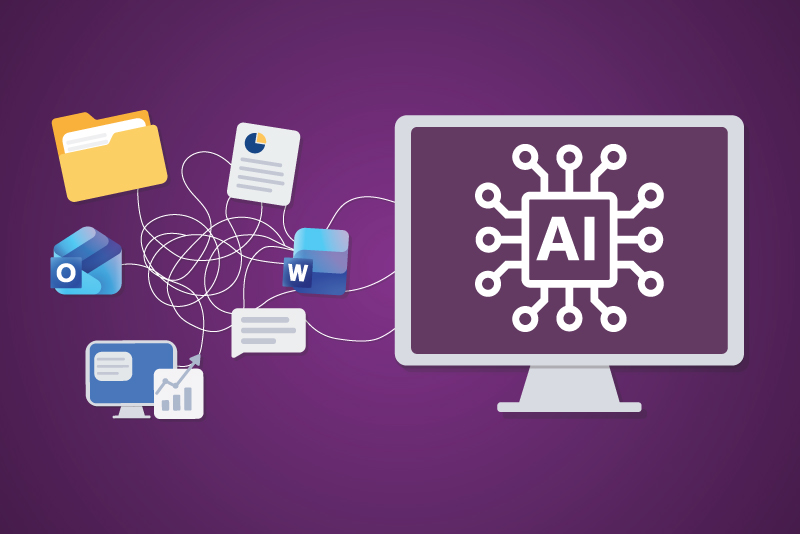
Most accountancy firms do not have an AI problem; however, they do have an information problem and AI is just exposing it.

After many years working with professional services firms, one pattern appears again and again. Organisations rarely encounter problems with information because they are careless. In most cases the challenge develops simply because the firm is successful, busy and continuously generating information as part of the work it delivers for clients.

AI is reshaping the economics of professional services – from pricing models to workforce strategy. This article explores key predictions for 2026 and what they mean for firm performance, profitability, and competitive advantage.

The last six months have seen an explosion of consumer interest in VPNs in the UK. Between the introduction of age verification rules for online content in July 2025, and the continued push to establish a digital ID for UK citizens, the technology is suddenly the focus of ongoing national debate.

Is your practice – and are you – ready to change? We think it’s time to move the profession forward, becoming one that not only solves compliance problems but drives the business community and its people to meet their ambitions.