AI-led predictions for professional services in 2026

This article shares a selection of predictions exploring how AI is reshaping professional services.

Accountancy practice management software has come a long way. Today, features like automated billing and reconciliations are easily integrated into the day-to-day practice workflow of Wolters Kluwer Tax & Accounting UK customers.

Our employees work side by side with our customers to create and manage these solutions – driven by a deep understanding of their needs and addressing the rapid changes in their environment.

However, it’s often hard to look beyond improving performance in day-to-day operations. Amid Brexit, the COVID-19 pandemic and other disruptions, accountancy practices and their clients are dealing with an unpredictable economic landscape. Future business planning can appear daunting.

However, technology can support accountancy practices (and their clients) in making informed business decisions, and planning for the future. In the first part of our Accountancy Practice Management for Future-Fit Growth series, we’ll explore how they can use technology to define and easily track Key Performance Indicators (KPIs). Doing so gives practices closer control of performance tracking, and deeper insights that will inform strategic growth plans.

Saving Time

For several decades, business technology platforms have enabled practices to track performance metrics that they have customised. This highlights areas that qualify for improvement and underpins strategic planning.

Contemporary technology, such as CCH KPI Monitoring, makes setting up KPIs faster and easier for accountancy practices than ever before. This is vital today. The current business landscape demands that firms assess and amend KPIs more frequently, based on fresh market variables. KPIs such as client retention rate and business time-to-recovery have become increasingly prominent performance indicators in the past year. If clunky technology makes KPI management difficult, practices have less time and insight to plan future growth.

Reducing Risk
CCH KPI Monitoring makes it far easier to track KPIs and report on them. This is fundamental in minimising risk. For example, if a KPI is set to track and escalate debt filtered by overdue dates, the ability to easily set alerts and automatically generate reports is critical to practice performance management.

Some practices are manually running monthly reports to measure KPIs. Others are running real-time reporting engines, a key feature of CCH KPI Monitoring. This latter solution allows practices to review essential data at any time – covering both performance management and compliance requirements. They can do so remotely or on-premise.

This means that firms can assess issues before they become problems, and thus act proactively. Real-time reporting is a true asset in building a future-fit practice.

The Proof is in the Practice
A number of Wolters Kluwer customers have been using CCH KPI Monitoring for several years now. Our customers look to us when they need to be right. Ryecroft Glenton has successfully integrated CCH KPI Monitoring with its own system. This consolidates information from several sources, including CCH Central and CCH Practice Management.

“We can use the year end date to trigger a sequence of reminders. Have we asked for the books? Have they been received? If a request to a client has been outstanding for a certain period, the partner will receive an alert via email. For limited companies, we can monitor the corporation tax and Companies House filing deadlines – as well as the different deadlines for pension schemes”

– Ian Smith, partner at Ryecroft Glenton

Corporate events agency who benefited from greener graphics initiative

“Apogee are not just aprinting company, theyconsult with us and go onto deliver a full end to endservice from concept toinstallation. They go aboveand beyond and we lookforward to continuing ourjourney with them”


Corporate events agency who benefited from greener graphics initiative

“Apogee are not just aprinting company, theyconsult with us and go onto deliver a full end to endservice from concept toinstallation. They go aboveand beyond and we lookforward to continuing ourjourney with them”
Corporate events agency who benefited from greener graphics initiative

“Apogee are not just aprinting company, theyconsult with us and go onto deliver a full end to endservice from concept toinstallation. They go aboveand beyond and we lookforward to continuing ourjourney with them”

Corporate events agency who benefited from greener graphics initiative

“Apogee are not just aprinting company, theyconsult with us and go onto deliver a full end to endservice from concept toinstallation. They go aboveand beyond and we lookforward to continuing ourjourney with them”

For decades, professional services pricing, delivery, and workforce models were built around a core assumption: client value was created through skilled professional time. AI is breaking that logic and rewriting the economics of time and value.

Clients expect efficiency savings, even as costs rise behind the scenes. But productivity gains do not automatically translate into spare capacity. At the same time, governance, compliance, and performance expectations are rising, requiring more time, oversight, and energy. Meanwhile, firms are rethinking hiring targets and their levers for growth.

Together, these pressures describe the operating reality firms are already navigating. The predictions below explore how these dynamics are already playing out in 2026.

1. The hourly rate no longer makes sense
AI breaks the math behind time-based pricing

Professional services pricing has long bundled technology into charge-out rates. Laptops, software, and internal systems sat inside overheads that made sense when skilled professional time was the primary source of client value.

AI changes that equation. Firms are investing more in technology while relying less on billable effort, creating a growing gap between how work is delivered and how it is priced. Time is no longer a reliable proxy for cost and value.

More firms will experiment with explicit technology charges, hybrid pricing models, or clearer value-based fees, not because they want to, but because the old math no longer works.

The change: pricing has to account for technology, not just effort.

2. Clients expect AI savings – even as firm costs rise
Pricing becomes a more strategic and uncomfortable conversation

From a client’s perspective, AI looks like efficiency, and efficiency should mean cheaper. Firms know the reality is more complex, and in some cases AI can justify a premium.

AI shifts where value sits. It takes on repetitive work, while expertise, judgement, and responsibility remain central. The result is not a more expensive service, but one that reflects expertise without the cost of avoidable friction.

At the same time, AI tools carry real costs, require oversight, and shift risk rather than removing it. This disconnect turns pricing into a more strategic, and sometimes uncomfortable, conversation.

Firms that cannot clearly explain what clients are paying for will feel margin pressure first.

The change: value has to be articulated, not assumed.

3. Productivity gains do not equal spare capacity
Time saved does not automatically become usable

AI saves time, but not always in reusable blocks. In service lines such as audit, where work is booked in fixed chunks, shaving hours off a task does not free someone up for another engagement.

People may be more productive on tasks, but that does not always show up commercially. The firms that benefit most will be those that deliberately turn fragmented time savings into usable capacity across teams.

That makes resource planning more critical, not less.

The change: turning time savings into capacity requires deliberate resource planning.

4. The biggest AI wins are not flashy
Think small, not sparkly

The most impactful AI use cases will not be dramatic. They will be practical.

Turning large volumes of structured work into clear, client-facing outputs is already delivering value. Reports, summaries, and closing documents are where AI will embed first.

These workflows reduce fatigue, improve consistency, and lower risk, outcomes that matter in regulated environments.

The change: process reliability and repeatability matter as much as bold innovation.

5. AI capability becomes part of individual performance
Using AI well stops being a personal preference

Many firms are still encouraging AI adoption. That will change. As productivity gaps widen, the ability to use AI tools well will influence appraisals, progression, and pay.

This applies across roles and seniority. Graduates will be asked how they use AI, not if.

Firms will need to support this shift with training and clear expectations, or risk uneven standards and disengagement.

The change: differences in how people use AI become visible in performance outcomes.

From debate to delivery

Across pricing, delivery, and resourcing, the same tension shows up again and again: how work is being done no longer aligns with how firms are structured to plan, price, and support it.

2026 is the point where that gap becomes harder to ignore. AI is no longer theoretical. It is embedded in day-to-day delivery, shaping how work is completed, reviewed, and handed off.

The change: Firms should shift away from debating what AI could change and respond to the reality it has already created.

These five predictions highlight where that shift is already taking shape. To explore all 12 predictions in full, read the complete article.


Apr 2026

50 tonnes of CO₂ avoided?

Rising pressure on costs, carbon , security and control is forcing accountancy firms to take a closer look at print. For one firm, a circular-first managed print strategy helped avoid 50 tonnes of CO₂e, cut energy use by 77% and enable a more secure, agile and sustainable print environment.

Your AI Tools Are Working Fine. Your Information Architecture Isn’t.

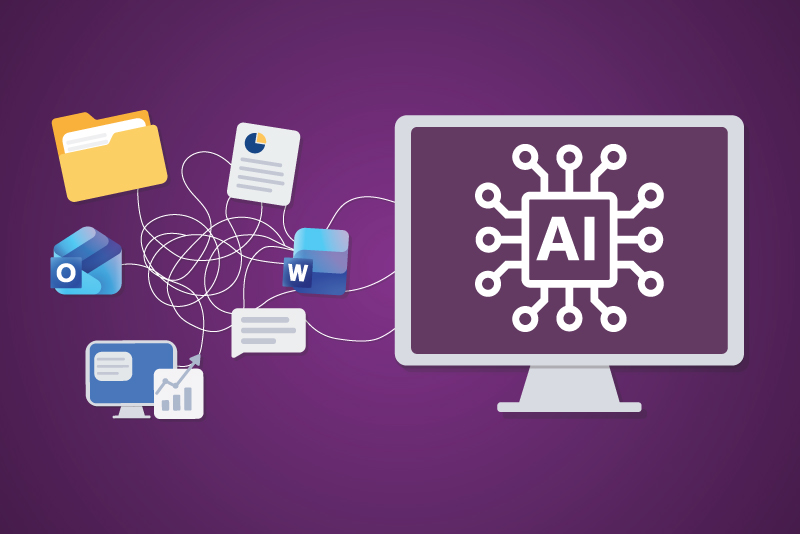
Most accountancy firms do not have an AI problem; however, they do have an information problem and AI is just exposing it.

Don't Wait for Practice Management Go-Live: Fix Resourcing and Margin Leakage Now

An ERP or practice management migration is one of the largest commitments your firm will undertake. It seems logical that "secondary" projects like resource management wait until after. After all, resource management runs off the data housed in your central systems.

When information becomes a liability: Why firms must tackle data sprawl

After many years working with professional services firms, one pattern appears again and again. Organisations rarely encounter problems with information because they are careless. In most cases the challenge develops simply because the firm is successful, busy and continuously generating information as part of the work it delivers for clients.

Rethinking connectivity: why leading accountancy firms are moving beyond VPNs

The last six months have seen an explosion of consumer interest in VPNs in the UK. Between the introduction of age verification rules for online content in July 2025, and the continued push to establish a digital ID for UK citizens, the technology is suddenly the focus of ongoing national debate.

Driving positive change in your accountancy practice

Is your practice – and are you – ready to change? We think it’s time to move the profession forward, becoming one that not only solves compliance problems but drives the business community and its people to meet their ambitions.