

Accountancy practice management software has come a long way. Today, features like automated billing and reconciliations are easily integrated into the day-to-day practice workflow of Wolters Kluwer Tax & Accounting UK customers.
Our employees work side by side with our customers to create and manage these solutions – driven by a deep understanding of their needs and addressing the rapid changes in their environment.
However, it’s often hard to look beyond improving performance in day-to-day operations. Amid Brexit, the COVID-19 pandemic and other disruptions, accountancy practices and their clients are dealing with an unpredictable economic landscape. Future business planning can appear daunting.
However, technology can support accountancy practices (and their clients) in making informed business decisions, and planning for the future. In the first part of our Accountancy Practice Management for Future-Fit Growth series, we’ll explore how they can use technology to define and easily track Key Performance Indicators (KPIs). Doing so gives practices closer control of performance tracking, and deeper insights that will inform strategic growth plans.
Saving Time
For several decades, business technology platforms have enabled practices to track performance metrics that they have customised. This highlights areas that qualify for improvement and underpins strategic planning.
Contemporary technology, such as CCH KPI Monitoring, makes setting up KPIs faster and easier for accountancy practices than ever before. This is vital today. The current business landscape demands that firms assess and amend KPIs more frequently, based on fresh market variables. KPIs such as client retention rate and business time-to-recovery have become increasingly prominent performance indicators in the past year. If clunky technology makes KPI management difficult, practices have less time and insight to plan future growth.
.jpg)
Reducing Risk
CCH KPI Monitoring makes it far easier to track KPIs and report on them. This is fundamental in minimising risk. For example, if a KPI is set to track and escalate debt filtered by overdue dates, the ability to easily set alerts and automatically generate reports is critical to practice performance management.
Some practices are manually running monthly reports to measure KPIs. Others are running real-time reporting engines, a key feature of CCH KPI Monitoring. This latter solution allows practices to review essential data at any time – covering both performance management and compliance requirements. They can do so remotely or on-premise.
This means that firms can assess issues before they become problems, and thus act proactively. Real-time reporting is a true asset in building a future-fit practice.
The Proof is in the Practice
A number of Wolters Kluwer customers have been using CCH KPI Monitoring for several years now. Our customers look to us when they need to be right. Ryecroft Glenton has successfully integrated CCH KPI Monitoring with its own system. This consolidates information from several sources, including CCH Central and CCH Practice Management.
“We can use the year end date to trigger a sequence of reminders. Have we asked for the books? Have they been received? If a request to a client has been outstanding for a certain period, the partner will receive an alert via email. For limited companies, we can monitor the corporation tax and Companies House filing deadlines – as well as the different deadlines for pension schemes”
– Ian Smith, partner at Ryecroft Glenton
.jpg)
“Apogee are not just aprinting company, theyconsult with us and go onto deliver a full end to endservice from concept toinstallation. They go aboveand beyond and we lookforward to continuing ourjourney with them”


“Apogee are not just aprinting company, theyconsult with us and go onto deliver a full end to endservice from concept toinstallation. They go aboveand beyond and we lookforward to continuing ourjourney with them”



The last six months have seen an explosion of consumer interest in VPNs in the UK. Between the introduction of age verification rules for online content in July 2025, and the continued push to establish a digital ID for UK citizens, the technology is suddenly the focus of ongoing national debate.
Ironically, this comes at a time where some industries are phasing out the technology as obsolete compared to modern alternatives.
This is particularly true in accountancy, where operational complexity has never been higher. Multi office structures, hybrid teams, cloud-based compliance platforms and an ever-tightening regulatory environment now define daily life — all of which are being accelerated by AI.
As firms digitise core processes, merge practices, and extend services into advisory and outsourced finance, their technology must evolve from simply connecting people to securing identities and data.
The issue of legacy networks
Historically, VPNs have offered useful qualities to these businesses. A VPN will encrypt internet traffic, allowing critical information like payroll data or tax records to be protected from those trying to intercept it. VPNs also provide a workable bridge between offices and remote workers, allowing them to work securely from home, client sites, or through cloud accounting platforms.
However, VPNs can also be a source of instability, escalating cost, and cyber exposure. A conventional VPN opens inbound ports to the internet, which is only robust if the user’s login credentials remain private. When every partner, audit trainee or outsourced accountant connects via passwords alone, identity assurance becomes guesswork.
It’s also true that VPNs can struggle with performance at scale. During peak periods like tax season, congestion and dropouts frustrate staff and delay critical client work. The underlying infrastructure was never designed for hundreds or thousands of concurrent connections across hybrid teams, cloud platforms and high‑volume financial data.
For ambitious firms growing through acquisition or building distributed teams, these limitations now directly impact productivity, security and client experience.
Enter the identity‑based network fabric
Rather than a virtual private network, firms are instead increasingly turning to ‘zero trust’ software-defined networks. These recognise both devices and users as unique, authorised identities, with neither trusted by default — regardless of location.
This means that unlike VPNs, there are no inbound ports exposed to the internet, eliminating a major attack surface. Every data packet travels across an end-to-end encrypted zero-trust fabric, ensuring only validated endpoints can exchange information.
In practice, that means tax, audit and accounts production systems perform at LAN grade speed, regardless of location. Whether a partner is reviewing workpapers from home or an outsourced finance team is closing month-end for a client, the experience is consistent, fast and secure.
Speeding up integration and delivery
Connectivity also plays a decisive role in mergers and acquisitions.
When firms acquire regional practices or specialist boutiques, integrating teams and systems traditionally takes months of network redesigns, new MPLS circuits or complex site‑to‑site VPNs. With a software‑based overlay, new offices and partners can be connected securely in hours — not months — creating a unified, compliant network without overhauling existing infrastructure.
The result is faster realisation of M&A value and smoother operational consolidation — critical in a market where integration speed often defines deal success. This isn’t just technical integration either; being introduced to your new employer’s systems and processes immediately after an acquisition can only help the cultural integration of new employees.
Operational simplicity and cost control
Beyond performance, accountancy leaders are demanding simpler IT operations. Streamlining is key.
Software‑defined connectivity reduces dependency on costly networking hardware and slashes the support burden of VPN credential management. Onboarding seasonal staff, contractors or outsourced bookkeepers becomes a one‑step digital process rather than a week of ticket‑based IT setup.
These gains translate directly into lower total cost of ownership and more predictable IT budgets—a theme resonating strongly with finance‑minded leadership teams.
Empowering client service and advisory work
Clients now expect instant collaboration with their accountants. Particularly in the age of agentic AI, where immediate responses to instructions and queries, the client experience has never been under such scrutiny.
Identity-based connectivity allows accountants to access client systems securely and in real time, without risking network exposure and maintain full compliance with GDPR, ISO 27001 and Cyber Essentials Plus while operating with greater agility. It is a strategic enabler for the future of professional services.
In a profession built on trust, the ability to guarantee both data integrity and responsiveness becomes a tangible competitive advantage.
The new connectivity mandate
The broader VPN debate is being highlighted everywhere from the living room to the House of Lords. While the conversations in accountancy firms are very different, the core principle is the same: regulation and control of our digital identities.
For Top 100 firms, moving beyond VPNs is not about chasing the latest technology. It’s about aligning connectivity with the realities of modern practice management: hybrid workforce, regulated data, rapid M&A and client-centric service models.
Firms that are rethinking connectivity now will be better positioned both competitively and reputationally than the firms that wait. By adopting an identity-based, zero-trust network fabric, accountancy firms can strengthen their security posture, streamline operations and deliver seamless performance across every service line.

Rising pressure on costs, carbon , security and control is forcing accountancy firms to take a closer look at print. For one firm, a circular-first managed print strategy helped avoid 50 tonnes of CO₂e, cut energy use by 77% and enable a more secure, agile and sustainable print environment.

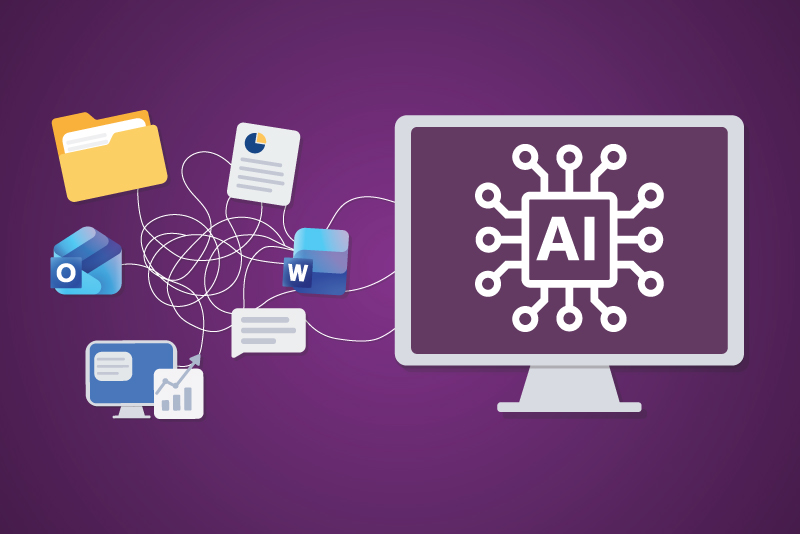
Most accountancy firms do not have an AI problem; however, they do have an information problem and AI is just exposing it.

An ERP or practice management migration is one of the largest commitments your firm will undertake. It seems logical that "secondary" projects like resource management wait until after. After all, resource management runs off the data housed in your central systems.

After many years working with professional services firms, one pattern appears again and again. Organisations rarely encounter problems with information because they are careless. In most cases the challenge develops simply because the firm is successful, busy and continuously generating information as part of the work it delivers for clients.

AI is reshaping the economics of professional services – from pricing models to workforce strategy. This article explores key predictions for 2026 and what they mean for firm performance, profitability, and competitive advantage.

Is your practice – and are you – ready to change? We think it’s time to move the profession forward, becoming one that not only solves compliance problems but drives the business community and its people to meet their ambitions.